ATEX Scales
Here you will find a range of ATEX Scales for use in Hazardous Areas. We are specialists in supplying ATEX weighing systems and manufacture a range of bespoke weighing platforms to suit. We supply equipment from prestige manufacturers such as Dini Argeo, MWS and Shinko Denshi.


 -15%IBC Floor Scale - ATEX Zone 1/21 - Mains PoweredOur Price £3,191.92 £3,830.30 List Price £4,506.24
 -15%IBC Floor Scale - ATEX Zone 1/21 - Battery PoweredOur Price £3,297.00 £3,956.40 List Price £4,656.00


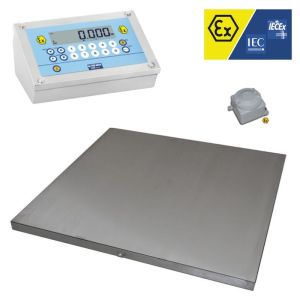


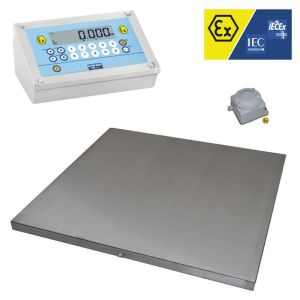


When you choose an ATEX-approved scale from Scalesmart, you can feel confident you’re making the right decision. We’re always happy to supply full ATEX approval documents and certificates of conformity whenever you need them—giving you complete peace of mind.
Understanding the ATEX Directives
The ATEX Directive 94/9/EC sets out the standards that manufacturers must meet for equipment and protective systems intended for use in hazardous or potentially explosive environments. It applies to both electrical and mechanical equipment and covers everything from underground sites to surface locations and offshore installations.
This directive first came into effect in the UK through the Equipment and Protective Systems Intended for Use in Potentially Explosive Atmospheres Regulations 1996, and was later updated in 2001 to clarify the rules around “putting into service.”
The ATEX Workplace Directive 1999/92/EC focuses on protecting workers who may be exposed to explosive atmospheres. It places responsibility on employers to ensure all necessary safety measures are in place and properly maintained.
In the UK, this directive is enforced through the Dangerous Substances and Explosive Atmospheres Regulations (DSEAR). Under DSEAR, employers were required to complete a full risk assessment of all hazardous areas on their site by 30 June 2006—and must continue to manage these risks responsibly today.
Why Scalesmart Is the Right Partner
Working with ATEX environments can feel daunting, particularly when safety and compliance are on the line. At Scalesmart, we take the stress out of the process. Our ATEX-approved scales are carefully selected to meet stringent industry standards, and our team is always available to guide you through choosing the right equipment for your needs. Whether you're upgrading existing systems or starting fresh, we’re here to help you stay compliant, confident, and fully supported.
ATEX Zones:
| Zone 0 (gases / Vapors) | An area in which an explosive mixture is continuously present or present for long periods | Class I Division 1 (gases) |
| Zone 1 (gases / Vapors) | An area in which an explosive mixture is likely to occur in normal operation | Class I Division 1 (gases) |
| Zone 2 (gases / Vapors) | An area in which an explosive mixture is not likely to occur in normal operation and if it occurs it will exist only for a short time. | Class I Division 2 (gases) |
| Zone 20 (dusts) | An area in which an explosive mixture is continuously present or present for long periods | Class II Division 1 (dusts) |
| Zone 21 (dusts) | An area in which an explosive mixture is likely to occur in normal operation | Class II Division 1 (dusts) |
| Zone 22 (dusts) | An area in which an explosive mixture is not likely to occur in normal operation and if it occurs it will exist only for a short time. | Class II Division 2 (dusts) |

Shop By
Shopping Options